How to Learn a Language by Reading: What the Research Says
Can you learn a language just by reading? What decades of research say about how much of a text you need to understand, how often you need to see a word, and how to read for real progress.
In short: Reading is one of the best supported ways to grow your vocabulary and fluency in a new language, but only if the text is at the right level. The research points to a useful sweet spot: you should already know about 95 to 98 percent of the words on the page. Read a lot, read things you enjoy, look up words sparingly, and come back to new words several times. That is the whole recipe. The rest of this article explains why.
Why reading works
Most of the words you know in your own language, you never studied. You picked them up from context, by meeting them again and again in books, conversations and screens. Researchers call this incidental learning, and it is the reason reading matters so much for a second language too.
Reading gives you something a textbook cannot: volume. A single short novel contains tens of thousands of words, and the most useful words in the language show up in it over and over, each time in a slightly different sentence. Every encounter adds a little more to what you know about a word: its meaning, its spelling, the words it usually appears with, the grammar around it.
The linguist Stephen Krashen built a whole theory around this idea in the 1980s. His input hypothesis says we acquire language by understanding messages that are slightly above our current level, which he called "comprehensible input". Parts of his theory are still debated (more on that below), but the core observation, that understanding lots of language drives learning, has held up well.
The evidence: does reading actually make you better?
Yes, and this is one of the more solid findings in language learning research.
- The "book flood" studies. In the early 1980s, Warwick Elley and Francis Mangubhai gave schools in Fiji large collections of illustrated storybooks in English. Children who simply read and shared these books for one school year made clearly bigger gains in reading and listening than classes taught with the standard audio-lingual drills. Similar programmes in other countries found the same pattern.
- Meta-analyses of extensive reading. A meta-analysis pools many studies to see if an effect holds overall. Nakanishi (2015) combined 34 studies with nearly 4,000 participants and found a medium positive effect of extensive reading on language proficiency. Jeon and Day (2016) pooled 49 studies with almost 6,000 participants and found small to medium gains in reading proficiency (comprehension, reading speed and vocabulary), with the largest effects for adult learners.
How sure are we? Fairly sure. The effect is not magic and it is not instant, but across many countries, ages and languages, people who read more in a language get better at it.
The 98 percent rule: how much should you understand?
This is the part most learners get wrong, in both directions. Some read only textbook dialogues and never get enough volume. Others jump into a novel, look up every third word, and quit after two pages.
Researchers have measured how much of a text you need to know to understand it:
- Laufer (1989) found that readers who knew at least 95 percent of the words in a text were much more likely to reach a passing comprehension score.
- Hu and Nation (2000) gave learners a short story in which 80, 90, 95 or 100 percent of the words were known. At 80 percent, no one understood it adequately. At 95 percent, only about a third to 40 percent of readers did. From the trend, the authors concluded that comfortable reading for pleasure takes 98 to 99 percent known words.
- Laufer and Ravenhorst-Kalovski (2010) summarised it as two thresholds: 95 percent is the minimum, 98 percent is the optimum.
One important nuance: a larger study of 661 learners (Schmitt, Jiang and Grabe, 2011) found no sudden "threshold". Comprehension simply rose steadily as the share of known words went up. So 98 percent is not a magic line. It is a useful target where most readers understand comfortably.
What does 98 percent feel like? It means roughly one unknown word in every 50, or about one or two per paragraph. That is enough to keep learning new words, but few enough that you can still guess them from context and enjoy the story.
At 90 percent, by contrast, you hit an unknown word in almost every sentence. Reading turns into decoding, and decoding is exhausting.
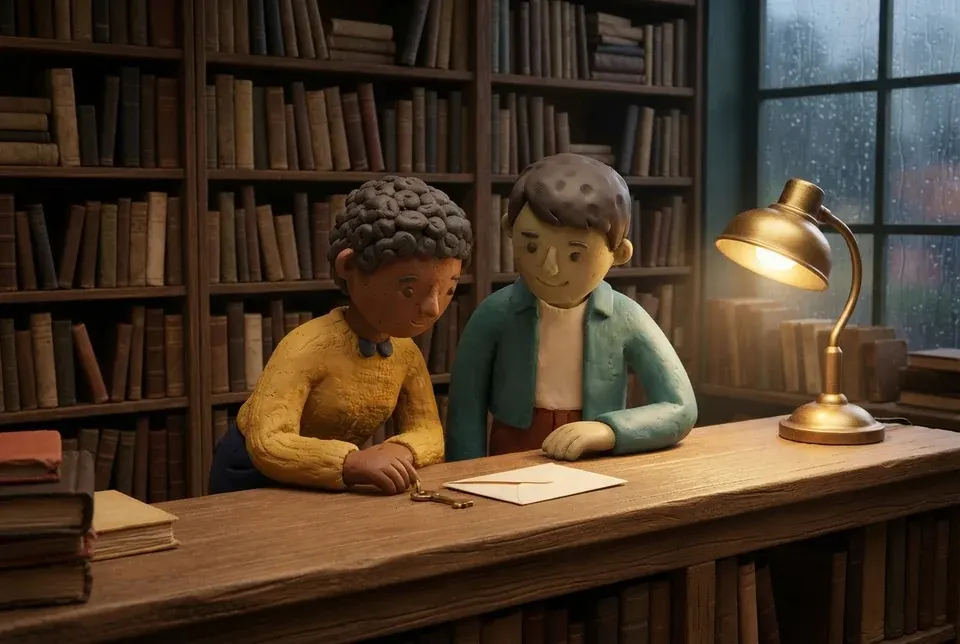
Lucía llega a la librería a las nueve. Afuera llueve y las calles están vacías. Detrás del mostrador hay una carta sin abrir y una llave pequeña. Lucía mira a su amigo Tomás. Nadie sabe quién la dejó allí. Ella abre el sobre con cuidado.
How many words is that?
Paul Nation (2006) estimated that reading a typical novel or newspaper with 98 percent coverage takes knowledge of around 8,000 to 9,000 word families (a word family is a word plus its forms, like read, reads, reading, reader). Most intermediate learners know far fewer than that.
That gap is the reason native books feel impossible for so long, and it is why level appropriate texts, like graded readers or stories written for your level, are not a crutch. They are how you get to 98 percent coverage while your vocabulary is still small.
How many times do you need to see a word?
Meeting a word once rarely means learning it. Studies of incidental vocabulary learning consistently show that frequency of encounters is one of the strongest predictors of whether a word sticks.
- Webb (2007) found that learners knew noticeably more about a word after ten encounters than after one, across several types of word knowledge. Even ten encounters, though, did not give them full mastery of every word.
- A meta-analysis by Uchihara, Webb and Yanagisawa (2019), pooling 26 studies, found a medium sized relationship: the more often learners met a word, the more likely they were to learn it. There is no single magic number, and how much each encounter helps depends on the learner and the context.
The practical lesson: one book is good, but many books at a similar level are better, because the same common words keep coming back. This is also why reviewing the words you look up, rather than just looking them up once, pays off.
Should you look words up?
A little, yes. Pure guessing from context is less reliable than it sounds: learners often guess wrong and then remember the wrong meaning.
In a classic study, Hulstijn, Hollander and Greidanus (1996) had advanced learners of French read a story with glosses (quick translations in the margin), with a dictionary, or with neither. Both the gloss and dictionary groups remembered more new words than the reading only group. Words that learners actually looked up stuck well, but many learners did not bother to open the dictionary. The lesson is that a lookup only helps if it is fast enough that you actually do it, without breaking the flow of reading.
A good rule of thumb:
- If the word is not stopping you from following the story, keep reading.
- If it shows up a second or third time, look it up.
- If it seems important for the plot, look it up.
- Save the words you look up so you can review them later.
What about the critics?
Being honest about the limits of the evidence matters.
- Input alone is probably not enough. Krashen argued that input is sufficient. Most researchers today disagree. Merrill Swain's research on Canadian French immersion students showed that years of rich input produced excellent comprehension but weaker speaking and writing accuracy. Her output hypothesis argues that producing language makes you notice what you cannot yet say.
- Some grammar attention helps. A meta-analysis of 49 studies (Norris and Ortega, 2000) found that instruction beats exposure alone, that explicit teaching tends to work better than implicit, and that the gains last. Reading and grammar study are partners, not rivals.
- Reading improves reading most. Reading builds vocabulary and comprehension strongly. It helps speaking less directly. If you want to speak, you also have to speak.
So the best supported approach is not "only read". It is read a lot at the right level, and combine it with review, a bit of grammar, and practice producing the language.
How to put this into practice
- Find your 98 percent level. Pick a page and count unknown words. More than two or three per paragraph means it is too hard for now. Drop down a level without guilt.
- Read for volume. Aim for 15 to 30 minutes a day. Many easy pages beat a few hard ones.
- Read what you enjoy. Extensive reading research consistently finds that pleasure and choice keep people reading, and reading time is what drives results.
- Stay at one level long enough. Several books at the same level give you the repeated encounters that make words stick.
- Look up words sparingly and save them. Then review them a few times over the next days.
- Read aloud or listen along sometimes. It links spelling to pronunciation and prepares you for speaking.
- Use what you read. Retell a chapter in two sentences, write a reply to a character, or talk about it. That is your output.
Where Franzie fits in
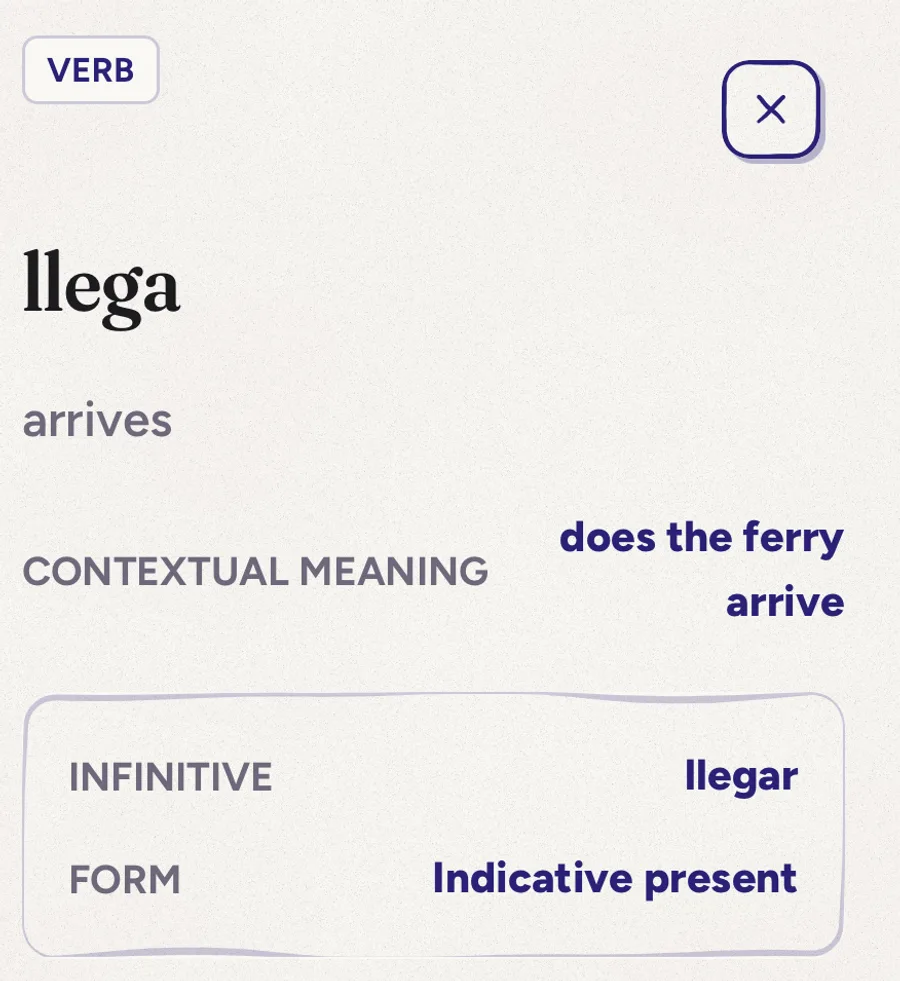
We built Franzie around this research. It writes stories in your target language at your level, so you stay close to that 98 percent sweet spot, about the topics you choose. You can tap any word for an instant translation and grammar explanation, save it, and review it later. After each chapter, short exercises and a roleplay with Franzie get you using the new words, not just recognising them.
You do not need an app to read well, though. A stack of graded readers, a dictionary and a notebook follow the same principles. What matters is reading a lot, at the right level, and coming back to what you learn.
FAQ
Can you learn a language just by reading?
You can build a large vocabulary and strong reading skills mostly through reading. For speaking, listening and writing, research suggests you also need practice in those skills.
How much should I read to learn a language?
There is no fixed number, but extensive reading programmes that show results usually involve regular reading over months, often several books per term. Consistency matters more than session length.
What is comprehensible input?
Language you can mostly understand, usually with a small amount just beyond your current level. The term comes from Stephen Krashen's input hypothesis.
Should I read books I find difficult?
Occasionally, for motivation. For learning, research favours texts where you know about 95 to 98 percent of the words.
Are graded readers worth it?
Yes. They let learners with a small vocabulary read at high coverage, which is where incidental learning works best.
Sources
- Elley, W. B., & Mangubhai, F. (1983). The impact of reading on second language learning. Reading Research Quarterly, 19(1), 53 to 67. https://doi.org/10.2307/747337
- Hu, M., & Nation, I. S. P. (2000). Unknown vocabulary density and reading comprehension. Reading in a Foreign Language, 13(1), 403 to 430. https://doi.org/10.64152/10125/66973
- Hulstijn, J. H., Hollander, M., & Greidanus, T. (1996). Incidental vocabulary learning by advanced foreign language students: The influence of marginal glosses, dictionary use, and reoccurrence of unknown words. The Modern Language Journal, 80(3), 327 to 339. https://doi.org/10.2307/329439
- Jeon, E. Y., & Day, R. R. (2016). The effectiveness of ER on reading proficiency: A meta-analysis. Reading in a Foreign Language, 28(2), 246 to 265. https://doi.org/10.64152/10125/66901
- Krashen, S. (1982). Principles and Practice in Second Language Acquisition. Pergamon. http://www.sdkrashen.com/content/books/principles_and_practice.pdf
- Laufer, B. (1989). What percentage of text-lexis is essential for comprehension? In C. Lauren & M. Nordman (Eds.), Special Language: From Humans Thinking to Thinking Machines (pp. 316 to 323). Multilingual Matters.
- Laufer, B., & Ravenhorst-Kalovski, G. C. (2010). Lexical threshold revisited. Reading in a Foreign Language, 22(1), 15 to 30. https://doi.org/10.64152/10125/66648
- Nakanishi, T. (2015). A meta-analysis of extensive reading research. TESOL Quarterly, 49(1), 6 to 37. https://doi.org/10.1002/tesq.157
- Nation, I. S. P. (2006). How large a vocabulary is needed for reading and listening? The Canadian Modern Language Review, 63(1), 59 to 82. https://doi.org/10.3138/cmlr.63.1.59
- Norris, J. M., & Ortega, L. (2000). Effectiveness of L2 instruction: A research synthesis and quantitative meta-analysis. Language Learning, 50(3), 417 to 528. https://doi.org/10.1111/0023-8333.00136
- Schmitt, N., Jiang, X., & Grabe, W. (2011). The percentage of words known in a text and reading comprehension. The Modern Language Journal, 95(1), 26 to 43. https://doi.org/10.1111/j.1540-4781.2011.01146.x
- Swain, M. (1985). Communicative competence: Some roles of comprehensible input and comprehensible output in its development. In S. Gass & C. Madden (Eds.), Input in Second Language Acquisition (pp. 235 to 253). Newbury House.
- Uchihara, T., Webb, S., & Yanagisawa, A. (2019). The effects of repetition on incidental vocabulary learning: A meta-analysis of correlational studies. Language Learning, 69(3), 559 to 599. https://doi.org/10.1111/lang.12343
- Webb, S. (2007). The effects of repetition on vocabulary knowledge. Applied Linguistics, 28(1), 46 to 65. https://doi.org/10.1093/applin/aml048
Keep reading
-
 Guides
How Long Does It Take to Learn French? What the Research Says
About 600 class hours for full time diplomats, and longer for most of us. What the FSI figures say about French, why listening is the slow part, and what helps.
Read the article
-
 Memory
How Many Times Do You Need to See a Word to Learn It?
Research says about 10 encounters for a solid start, and some words take more than 20. Why the number varies, and how to make each encounter count.
Read the article
-
 Guides
How Long Does It Take to Learn German? What the Research Says
About 600 class hours for full time diplomats, and longer for most of us. What the FSI figures say about German, where the time goes, and what speeds you up.
Read the article